


Dental Implants in Safdarjung Enclave, Delhi: A Complete Educational Guide
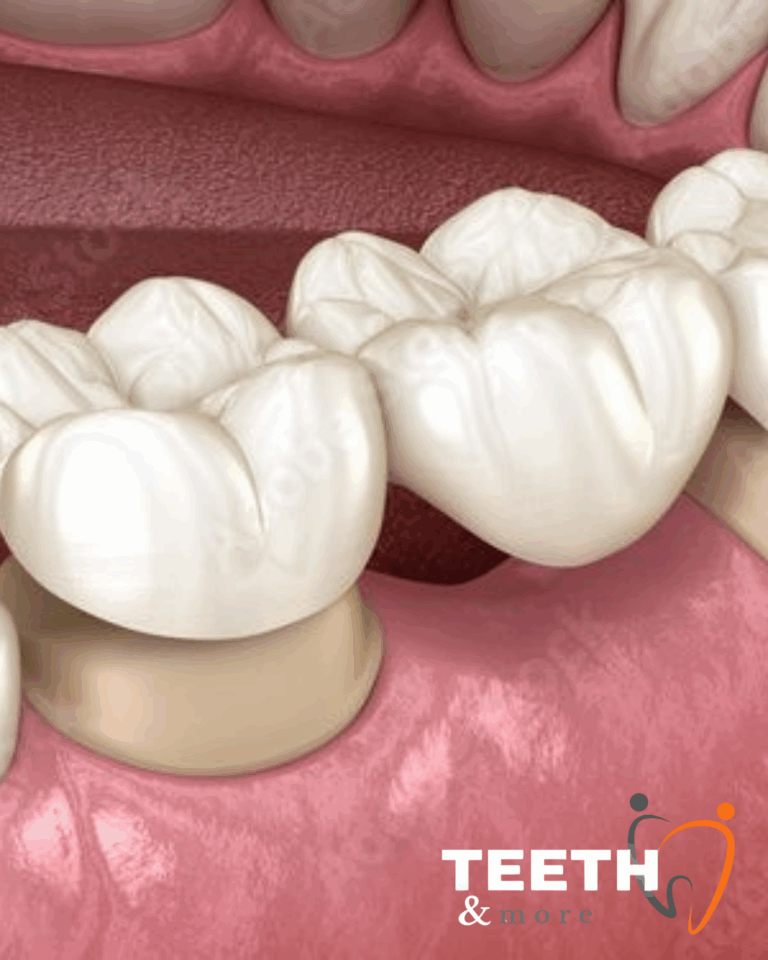
Missing teeth affect more than appearance. They change how you chew, speak, and even how your jawbone ages over time. For many patients, dental implants are considered the most stable and long-lasting option for tooth replacement when compared to dentures or bridges.
This guide explains how implant treatment works, who it’s suitable for, what it costs in India, and what patients in Safdarjung Enclave, Delhi should realistically expect before making a decision.
What Are Dental Implants?
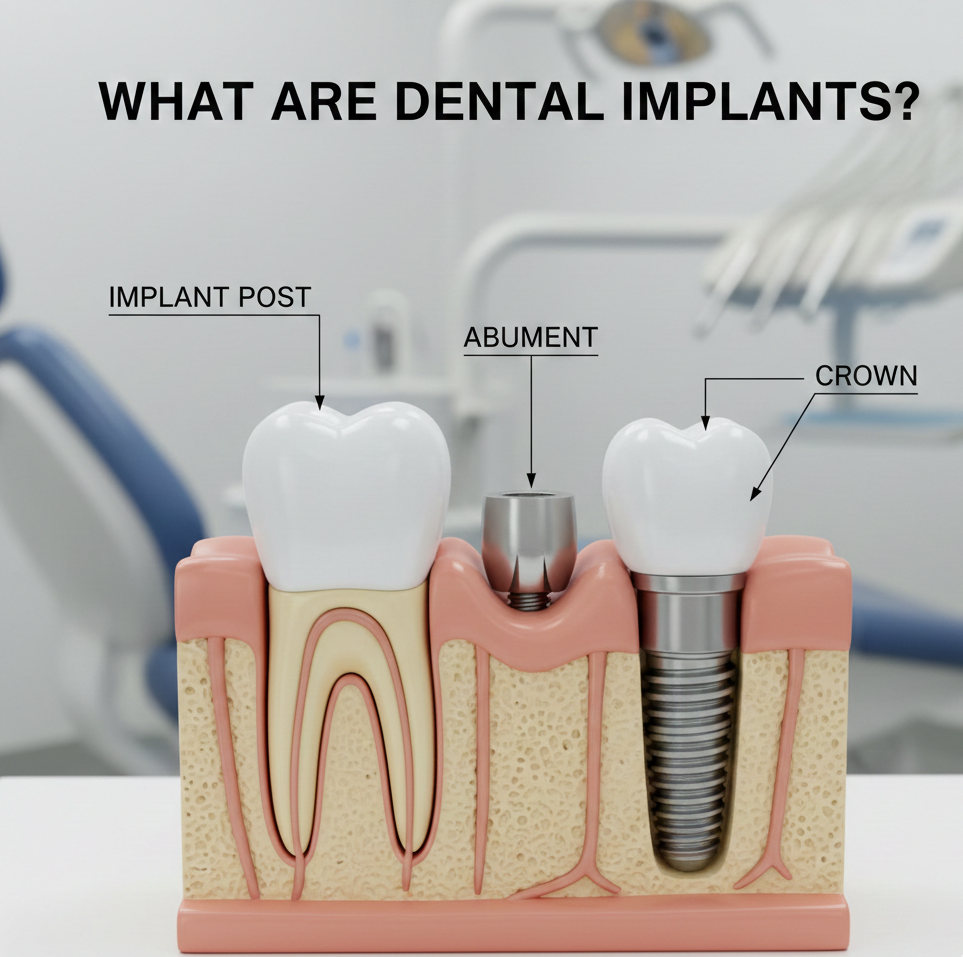
A dental implant is a medical-grade titanium post placed into the jawbone to replace the root of a missing tooth. Over time, the bone fuses with the implant through a process called osseointegration, creating a stable foundation for a crown, bridge, or denture.
Unlike removable dentures, implants are fixed in place and function much like natural teeth. Because they integrate with the jawbone, they also help prevent bone loss, which commonly occurs after tooth loss.
This guide explains how implant treatment works, who it’s suitable for, what it costs in India, and what patients in Safdarjung Enclave, Delhi should realistically expect before making a decision.
Why Tooth Replacement Matters
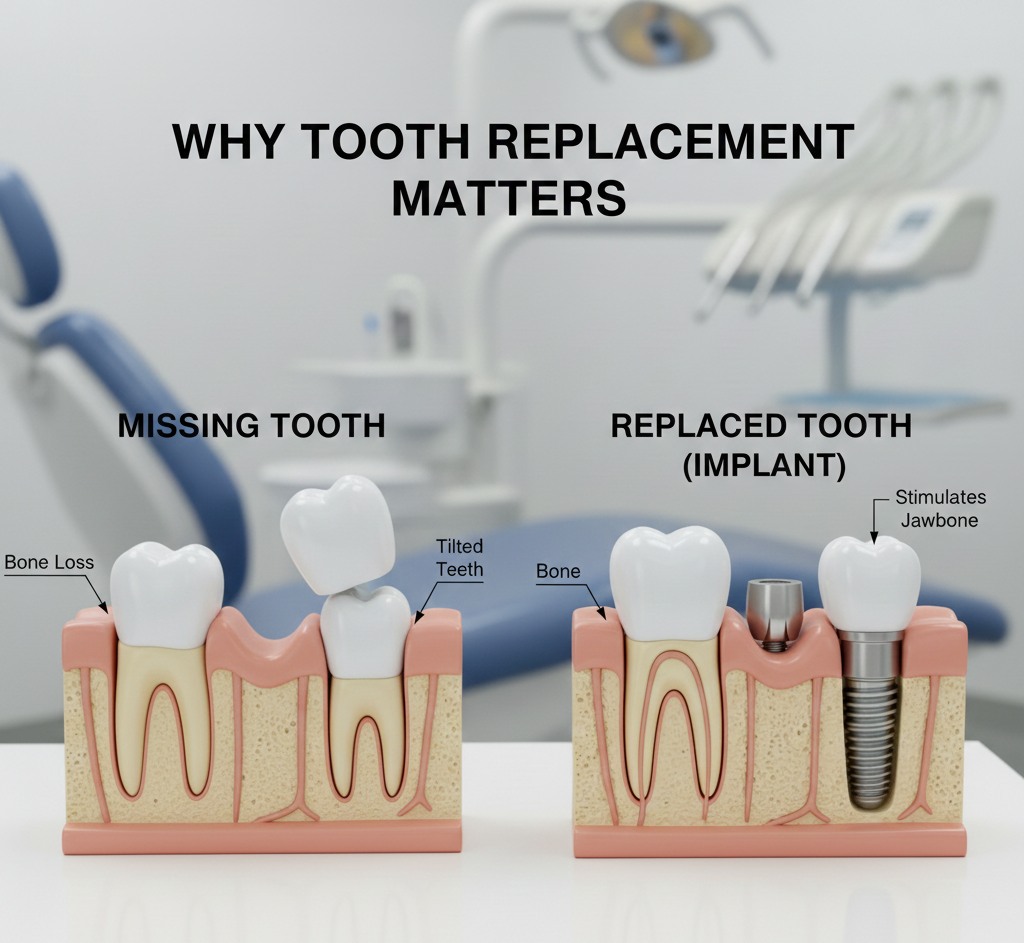
When a tooth is lost and not replaced, nearby teeth begin to shift toward the empty space. This can lead to bite problems, uneven wear, jaw discomfort, and difficulty cleaning between teeth. Over time, the jawbone in the missing tooth area begins to shrink due to lack of stimulation.
Replacing missing teeth early helps maintain oral balance, facial structure, and long-term dental health.
Types of Dental Implants
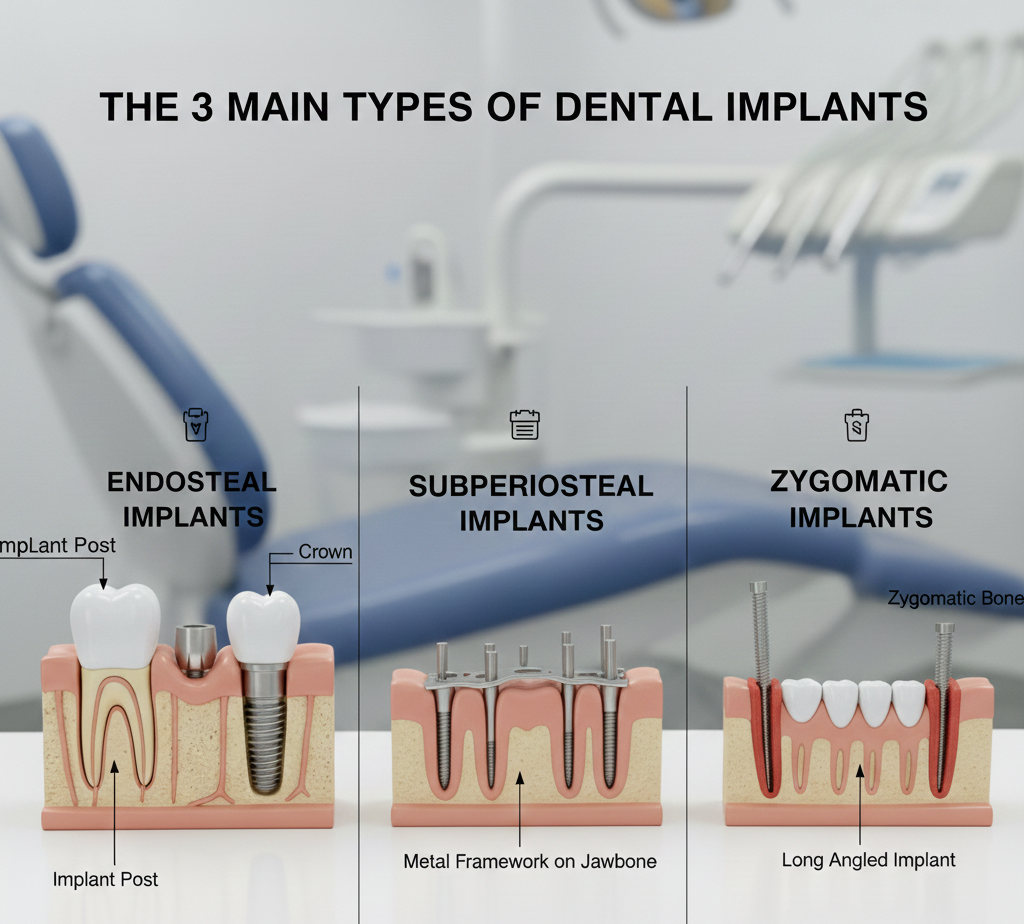
Patients often search for “what are the 3 types of dental implants” because not all implant treatments are the same. The main categories include:
1. Endosteal Implants
These are the most commonly used type. They are placed directly into the jawbone and typically support a single crown or multiple teeth.
2. Subperiosteal Implants
Placed under the gum but above the jawbone, these are used when a patient does not have sufficient bone height and cannot undergo bone grafting.
3. Zygomatic Implants
Used in complex cases with severe bone loss, these anchor into the cheekbone rather than the jawbone. They are less common and require specialized expertise.
Your dentist determines the type based on bone quality, overall health, and treatment goals.
Dental Implants Procedure: Step by Step
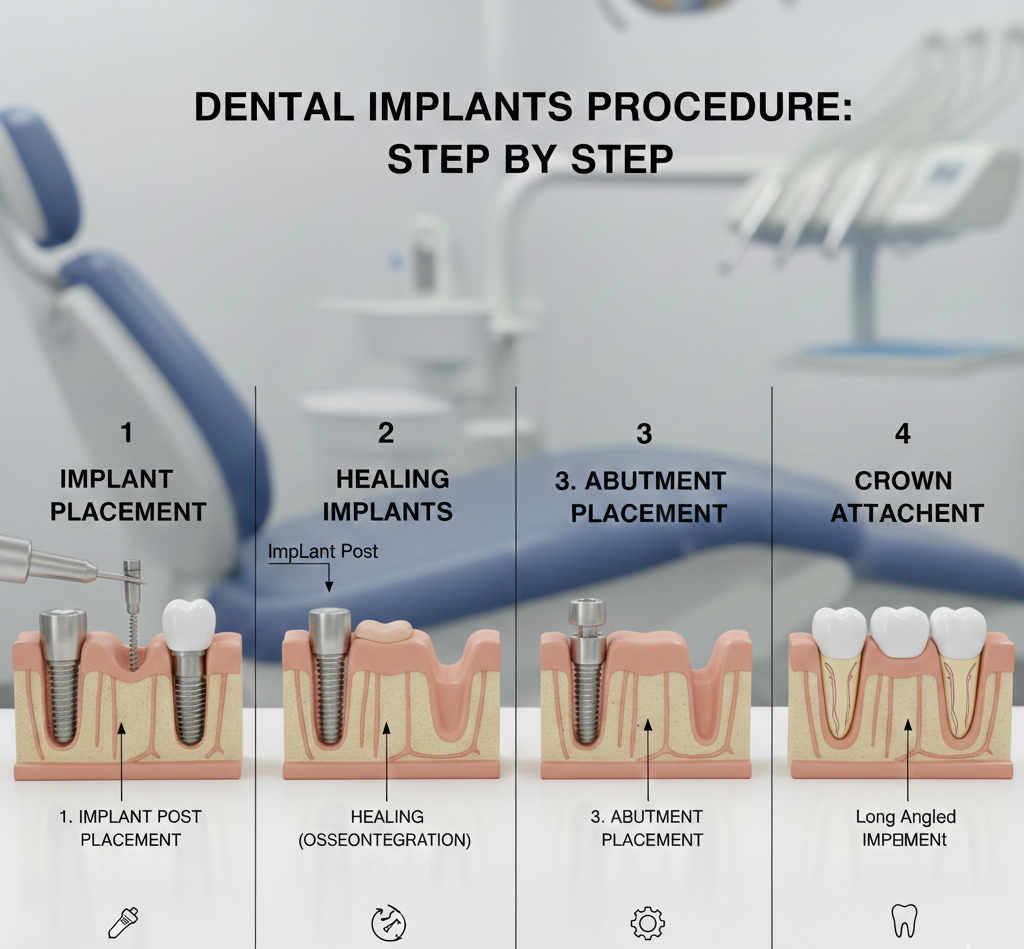
Understanding the procedure helps reduce anxiety and unrealistic expectations.
Initial Consultation and Imaging
The process begins with a detailed dental exam, X-rays, and sometimes 3D imaging to evaluate bone density and plan placement.
Implant Placement
The implant post is surgically placed into the jawbone under local anesthesia. Discomfort is usually mild and manageable.
Healing and Osseointegration
Over several weeks or months, the bone integrates with the implant. This step is critical for long-term success.
Abutment and Crown Placement
Once healed, a connector (abutment) and custom-made crown are attached, restoring function and appearance.
Dental Implants Cost in India
Cost is one of the most searched topics, especially “dental implants cost per tooth.”
In India, the price varies based on:
Type of implant system used
Bone grafting requirements
Tooth location (front vs back)
Crown material
While implants cost more upfront than bridges or dentures, they often last significantly longer, making them cost-effective over time.
In areas like Safdarjung Enclave, Delhi, pricing reflects the quality of materials, technology used, and clinical expertise.
Before and After: What Changes Can You Expect?
Patients often look for “dental implants before and after” to understand results. After successful treatment, patients typically experience:
Improved chewing efficiency
Clearer speech
Better facial balance
Increased confidence
The replacement tooth is designed to blend naturally with surrounding teeth, both in color and shape.
Side Effects and Risks
Like any medical procedure, implant treatment carries some risks, though complications are relatively rare when performed properly.
Possible side effects include:
Temporary swelling or soreness
Minor bleeding after surgery
Infection if oral hygiene is poor
Long-term complications may occur if implants are placed in inadequate bone or if smoking and uncontrolled medical conditions interfere with healing.
Who Is a Good Candidate for Dental Implants?
Most healthy adults are candidates. However, suitability depends on:
Adequate jawbone volume
Healthy gums
Good oral hygiene habits
Controlled medical conditions
Even patients with bone loss may still qualify through bone grafting or alternative techniques.
Dental Implants vs Other Tooth Replacement Options
Compared to bridges:
Implants do not rely on neighboring teeth
They preserve jawbone health
Compared to dentures:
Implants are fixed and stable
They offer better chewing power and comfort
These advantages explain why dental implants are often recommended for long-term tooth replacement when conditions allow.
Recovery and Aftercare
Recovery is usually straightforward. Most patients return to normal activities within a day or two, avoiding hard foods during early healing.
Good oral hygiene, regular dental checkups, and avoiding smoking significantly improve success rates.
Local Perspective: Safdarjung Enclave, Delhi
Patients in Safdarjung Enclave, Delhi often seek implant treatment for both functional and aesthetic reasons. Clinics like Teeth & More focus on careful planning, modern imaging, and patient education to ensure predictable outcomes rather than rushed procedures.
Choosing an experienced provider matters more than speed or discounts.
Frequently Asked Questions (FAQ)
With proper care, implants can last many years, often decades.
Most patients report mild discomfort similar to a tooth extraction, which subsides within a few days.
Initial healing takes a few days, while full integration may take several months.
Failure is rare but can occur due to infection, poor bone quality, or smoking.
Age alone is not a restriction. Overall health and bone condition matter more.
Final Thoughts
Replacing missing teeth is not just about looks. It’s about function, comfort, and long-term oral health. Understanding the process, risks, and benefits allows patients to make informed decisions instead of rushed ones.
For patients considering dental implants in Safdarjung Enclave, Delhi, a thorough evaluation and clear treatment plan are essential for lasting success.