


Wisdom Tooth Removal Recovery: What to Expect, What’s Normal, and What Can Go Wrong
Overview
Wisdom tooth removal is one of the most common oral surgeries. Recovery is not instant, not glamorous, and definitely not the same for everyone. Some people bounce back quickly. Others feel like their jaw has declared war on them.
Understanding wisdom tooth removal recovery helps you avoid unnecessary pain, prevent complications, and heal faster. This guide explains recovery timelines, pain patterns, food rules, dos and don’ts, side effects, and when to worry. If you’re in or around Safdarjung Enclave, where many extractions involve impacted teeth, proper recovery care matters even more.
Why Wisdom Tooth Removal Affects Recovery So Much
Not all wisdom teeth are equal.
Recovery depends on:
Whether the tooth was fully erupted or impacted
Bone removal or stitches
Your age
Smoking habits
Oral hygiene
Immune response
An impacted wisdom tooth takes longer to heal. Period. Anyone promising “no pain, same-day recovery” is selling optimism, not medicine.
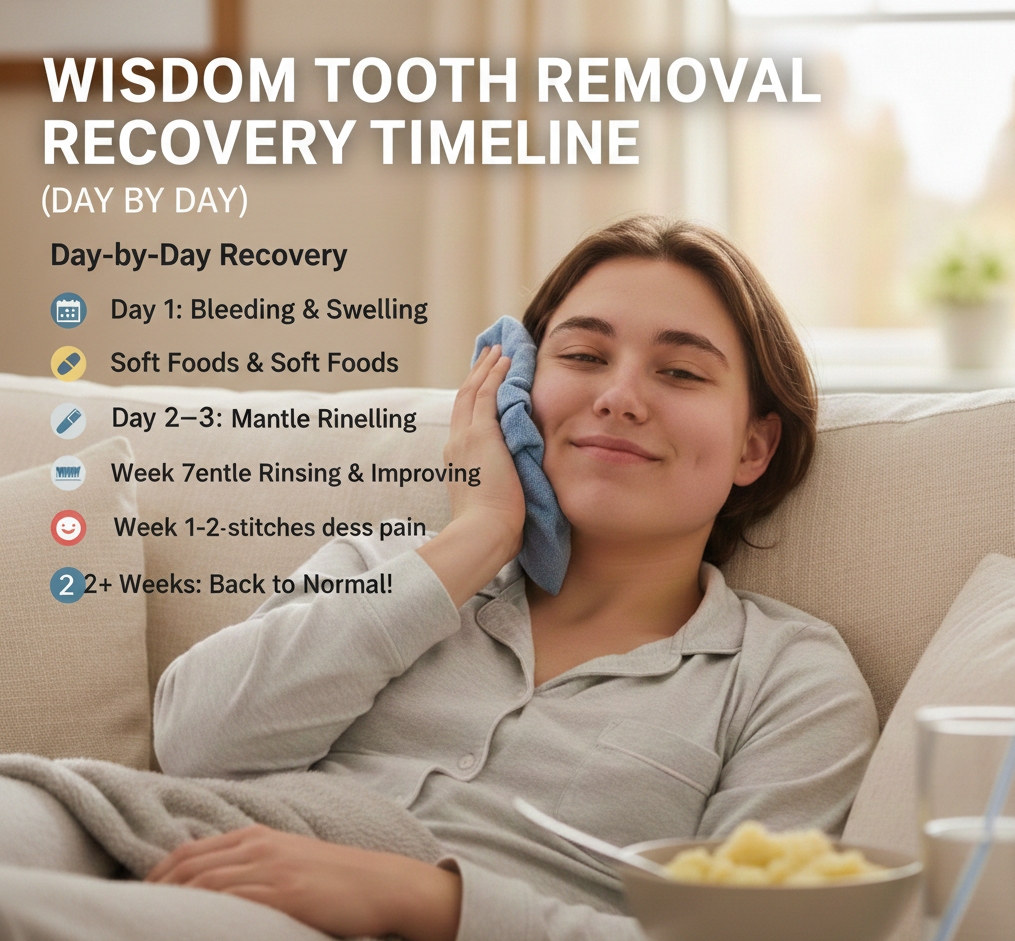
Wisdom Tooth Removal Recovery Timeline (Day by Day)
Day 1: Surgery Day
Numbness wears off
Swelling begins
Bleeding slows within a few hours
Mild to moderate pain starts
Talking is possible, but not enjoyable. Rest matters more than toughness.
Day 2–3: The Worst Days
This is usually the worst day of pain after wisdom tooth extraction.
Peak swelling
Jaw stiffness
Bruising may appear
Pain increases before it improves
This phase makes people panic and Google horror stories. Relax. This is normal wisdom tooth removal recovery.
Day 4–7: Turning Point
Pain starts decreasing
Swelling slowly reduces
Jaw mobility improves
You feel human again
If pain worsens instead of improving, call your dentist.
Week 2: Healing Phase
Gum tissue closes
Stitches dissolve or are removed
Normal eating resumes gradually
3–4 Weeks: Full Recovery
Bone continues healing
Socket stabilizes
Most people forget it ever happened
How Long Does Wisdom Tooth Removal Recovery Take?
Simple extraction: 7–10 days
Impacted extraction: 2–3 weeks
Bone healing: up to 6 weeks
Anyone claiming full recovery in 48 hours either had an unusually easy case or is lying.
Pain After Wisdom Tooth Extraction: What’s Normal?
Normal pain:
Throbbing near extraction site
Jaw soreness
Mild ear or headache
Not normal:
Severe pain starting day 4–5
Bad taste or smell
Visible bone
Fever
These can signal dry socket, the most common complication during wisdom tooth removal recovery.

Side Effects of Wisdom Tooth Extraction
Common side effects:
Swelling
Bruising
Limited mouth opening
Mild bleeding
Temporary but less common:
Numbness (nerve irritation)
Jaw stiffness
Rare but serious:
Infection
Dry socket
Nerve damage
Ignoring aftercare instructions is the fastest way to upgrade from “normal recovery” to “unnecessary complication.”
Dos and Don’ts After Wisdom Tooth Extraction
DO:
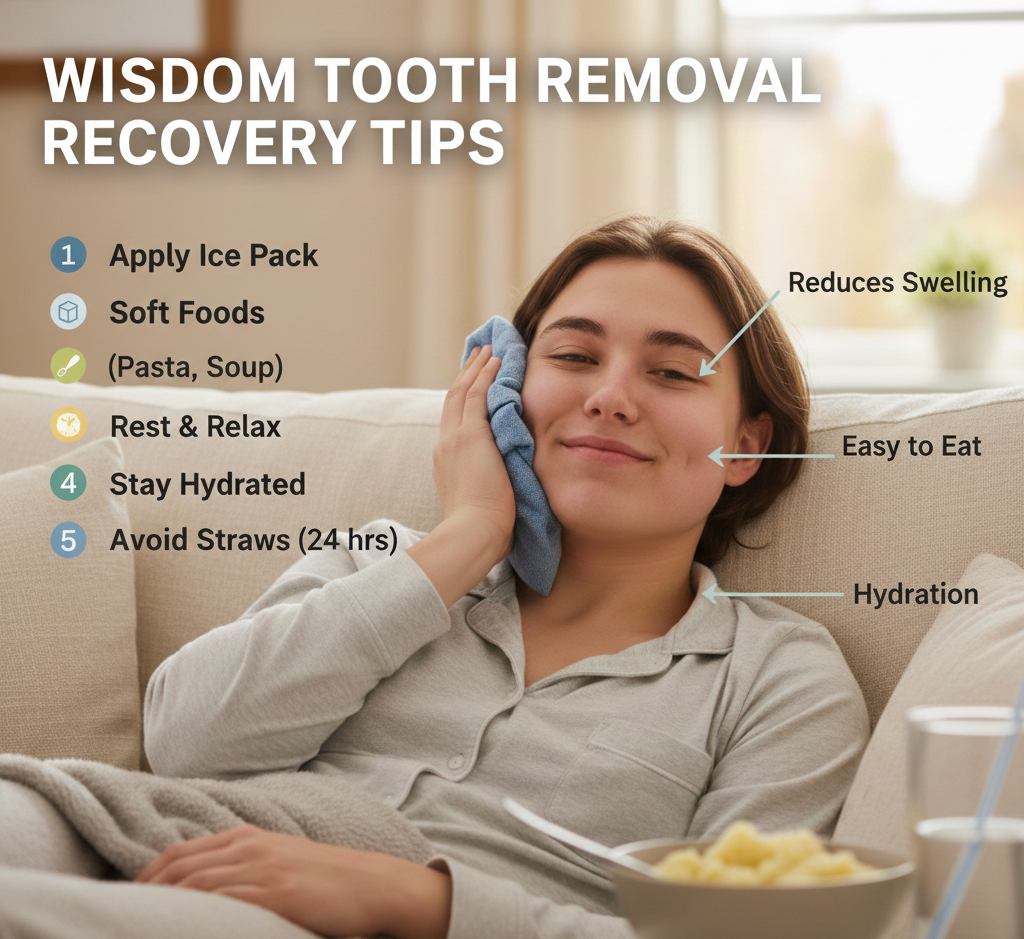
Apply ice packs for first 24 hours
Take prescribed medications on time
Sleep with head elevated
Rinse gently with saltwater after 24 hours
Maintain oral hygiene carefully
DON’T:
Smoke or vape
Use straws
Spit aggressively
Touch the extraction site
Eat hard, crunchy, or spicy food
Breaking these rules directly delays wisdom tooth removal recovery.
Wisdom Tooth Removal Recovery Food Guide
First 24–48 Hours:
Cold yogurt
Smoothies (no straw)
Mashed potatoes
Soft soups (lukewarm)
Days 3–7:
Scrambled eggs
Soft rice
Well-cooked vegetables
Paneer, dal
Avoid:
Nuts
Chips
Seeds
Sticky foods
Food debris trapped in sockets = infection risk.
How to Speed Up Wisdom Teeth Recovery
You can’t rush biology, but you can stop sabotaging it.
Follow medication schedule
Maintain oral hygiene
Avoid smoking
Stay hydrated
Eat nutrient-rich soft foods
People searching how to speed up wisdom teeth recovery usually want shortcuts. There aren’t any. Consistency beats hacks.

How Soon Can You Talk After Wisdom Teeth Removal?
You can talk the same day, but:
Keep it minimal for 24 hours
Avoid long conversations
Jaw muscles need rest
Talking too much early can increase swelling and discomfort during wisdom tooth removal recovery.
Wisdom Tooth Removal Recovery: Reddit vs Reality
Reddit is full of extremes:
“I was fine in one day”
“Worst pain of my life”
Reality sits in the middle. Most recoveries are uncomfortable but manageable. Online horror stories usually involve dry socket, smoking too soon, or ignoring instructions.
When Should You Call Your Dentist?
Call immediately if:
Pain worsens after day 4
Swelling increases instead of reducing
Fever develops
Bad taste or pus appears
Numbness lasts more than a few days
Early intervention saves time, pain, and money.
Why Professional Follow-Up Matters
In areas like Safdarjung Enclave, many wisdom tooth extractions involve impaction due to smaller jaw sizes. This increases recovery complexity. Follow-up visits ensure healing is progressing correctly and prevent long-term issues.
FAQ: Wisdom Tooth Removal Recovery
How long does pain last after wisdom tooth removal?
Most pain peaks by day 2–3 and improves significantly by day 5–7.
What is dry socket?
A condition where the blood clot dislodges, exposing bone and causing severe pain.
Can I brush my teeth after extraction?
Yes, but avoid the extraction site for the first 24 hours.
Is swelling normal?
Yes. Swelling peaks around day 2–3.
Can wisdom tooth extraction cause nerve damage?
Rarely. Most nerve symptoms are temporary.
When can I return to work?
Usually after 2–3 days, depending on job demands.