


Teeth Whitening in Safdarjung Enclave, Delhi: An Educational Guide to Safe and Effective Brightening
A brighter smile is one of the most common cosmetic dental goals, yet it’s also one of the most misunderstood. The internet is full of quick fixes, miracle serums, and home remedies that promise instant results. Most of them either don’t work or cause damage over time.
Understanding how teeth whitening actually works helps you choose methods that are effective, safe, and appropriate for your teeth rather than chasing shortcuts that lead to sensitivity or enamel damage.
What Is Teeth Whitening?
Teeth whitening is a cosmetic dental process designed to lighten the color of natural teeth by removing stains and discoloration. It does not change the structure of teeth, but it alters how light reflects off the enamel by breaking down stain molecules.
Discoloration can be:
Extrinsic, caused by surface stains from food, drinks, or smoking
Intrinsic, caused by changes within the tooth due to aging, trauma, or medication
Different causes require different approaches, which is why results vary so widely between individuals.
Why Teeth Become Discolored
Tooth color naturally darkens with age as enamel thins and the underlying dentin becomes more visible. Common contributors include:
Coffee, tea, red wine, and dark-colored foods
Tobacco use
Poor oral hygiene
Certain medications
Dental trauma
No single method works for every type of discoloration. That’s the part marketing usually skips.
Professional Teeth Whitening Treatment
In-office whitening is performed under dental supervision using controlled concentrations of whitening agents. Gums and soft tissues are protected, and the process is adjusted based on tooth sensitivity and shade goals.
Professional whitening typically:
Produces faster, more uniform results
Reduces risk of chemical burns or enamel damage
Allows customization for sensitive teeth
Clinics in areas like Safdarjung Enclave, Delhi often recommend professional treatment for patients seeking noticeable but safe improvement.
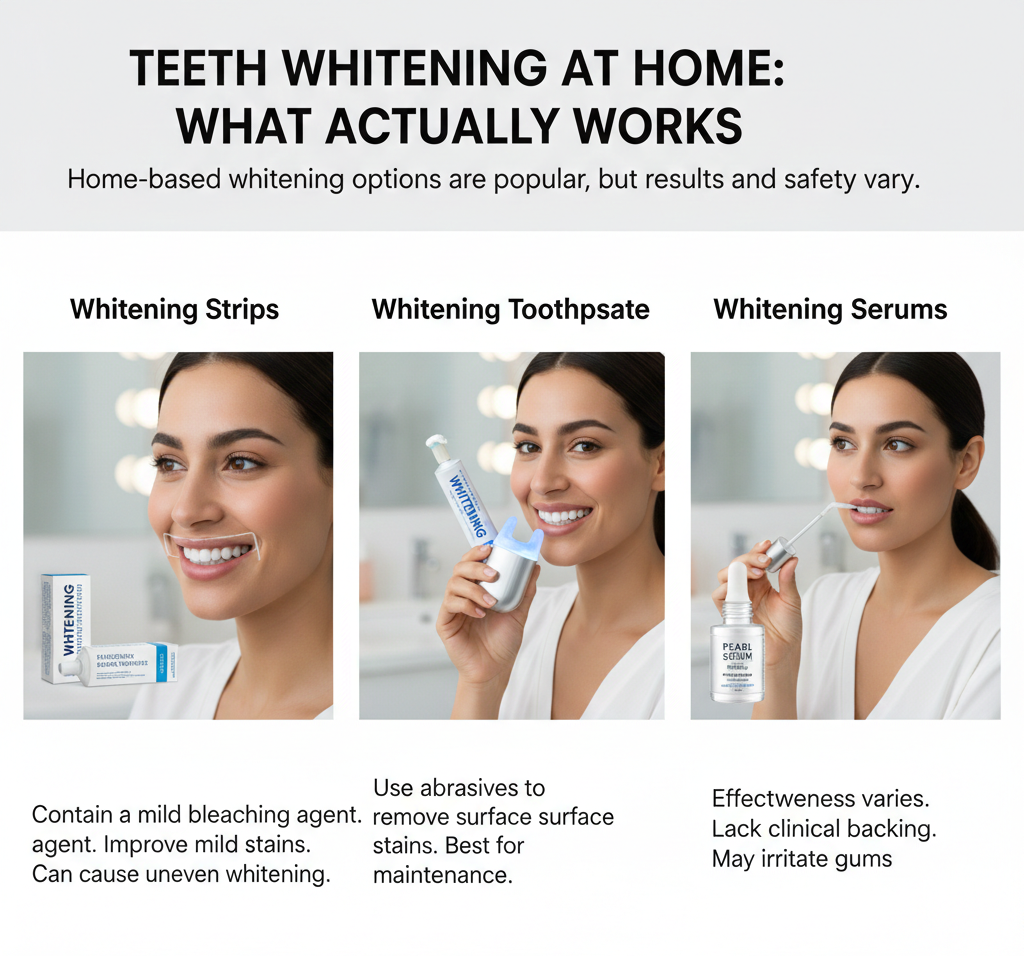
Teeth Whitening at Home: What Actually Works
Home-based whitening options are popular because they’re accessible, but results and safety vary significantly.
Whitening Strips
Strips contain a mild bleaching agent and are worn for a set time daily. They can improve mild staining but may cause uneven whitening if not applied carefully.
Whitening Toothpaste
These toothpastes use abrasives or low-level agents to remove surface stains. They do not change the natural color of teeth and are best for maintenance, not transformation.
Whitening Serums
Often marketed aggressively online, their effectiveness depends on ingredient quality and concentration. Many lack clinical backing and may irritate gums.
When used incorrectly, at-home products can increase sensitivity or weaken enamel, especially without dental guidance.
Teeth Whitening Home Remedies: What to Avoid
People frequently search for natural remedies, but many are harmful despite being labeled “safe.”
Common examples include:
Lemon juice
Baking soda used excessively
Activated charcoal
Apple cider vinegar
These substances can erode enamel over time. Once enamel is damaged, it does not regenerate. This is where well-meaning DIY efforts backfire.
How Long Do Whitening Results Last?
Results depend on habits and oral care. Whitening effects may last several months to a couple of years.
Factors influencing longevity include:
Diet and beverage choices
Smoking
Oral hygiene routine
Type of whitening method used
Maintenance treatments or whitening-friendly habits help extend results.
Side Effects and Sensitivity
Temporary tooth sensitivity is the most common side effect. This happens when whitening agents penetrate enamel and irritate the tooth’s nerve endings.
Other possible effects include:
Gum irritation
Uneven color if restorations are present
Increased sensitivity to temperature
These effects are usually temporary but highlight why professional oversight matters.
Who Is a Good Candidate for Teeth Whitening?
Most adults with healthy teeth and gums are suitable candidates. However, whitening may not be effective for:
Teeth with crowns or veneers
Severe intrinsic stains
Active cavities or gum disease
A dental evaluation ensures whitening is appropriate and safe.
Before and After Expectations
Whitening enhances brightness but does not create artificial, paper-white teeth unless that shade already suits your natural tooth structure. The goal is improvement, not uniformity with filters.
Understanding realistic outcomes prevents disappointment and overuse of whitening products.
Long-Term Oral Health Considerations
Repeated or aggressive whitening without guidance can:
Increase enamel wear
Cause chronic sensitivity
Irritate gums
Moderation and professional input protect both appearance and dental health.
Local Dental Care in Safdarjung Enclave, Delhi
Dental clinics like Teeth & More emphasize patient education before recommending cosmetic treatments. Proper assessment helps determine whether whitening alone is suitable or if other treatments are needed for balanced results.
This conservative, evidence-based approach supports both safety and satisfaction.
Frequently Asked Questions (FAQ)
Yes, when performed correctly and under dental guidance. Problems usually arise from misuse or overuse of products.
Results depend on natural tooth color, type of stains, and method used. Whitening improves shade but does not alter tooth structure.
Improper or excessive use can weaken enamel. Professional supervision minimizes risk.
Frequency depends on the method used and individual sensitivity. Dentists typically recommend spacing treatments appropriately.
No. Restorations do not respond to whitening agents and may require replacement for color matching.
Final Thoughts
A brighter smile is achievable, but only when approached with realistic expectations and proper care. Understanding how whitening works, what methods are safe, and what risks exist allows patients to make informed decisions instead of impulsive ones.
For individuals considering teeth whitening in Safdarjung Enclave, Delhi, education and professional evaluation are the difference between a confident smile and long-term sensitivity.