


Gum Disease Symptoms: Early Warning Signs You Should Never Ignore
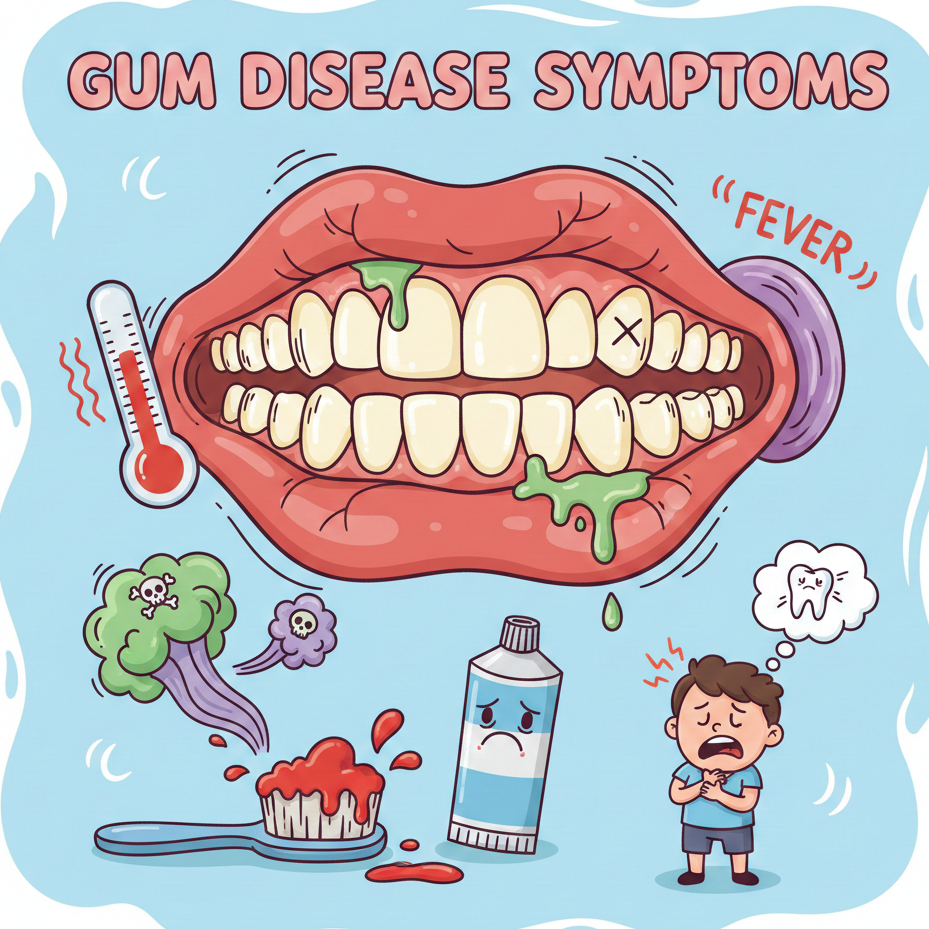
Gum problems rarely announce themselves with drama. They start quietly. A little bleeding while brushing. Slight swelling. Bad breath that doesn’t go away. Most people ignore these signs until the damage is expensive, painful, and permanent.
Understanding gum disease symptoms early can save your teeth, your jawbone, and a lot of regret. This guide explains what gum disease is, how it progresses, what symptoms to watch for, and when professional treatment becomes unavoidable. If you live in or around Safdarjung Enclave, this is especially relevant because delayed dental visits are one of the most common reasons gum disease becomes severe in urban patients.
What Is Gum Disease?
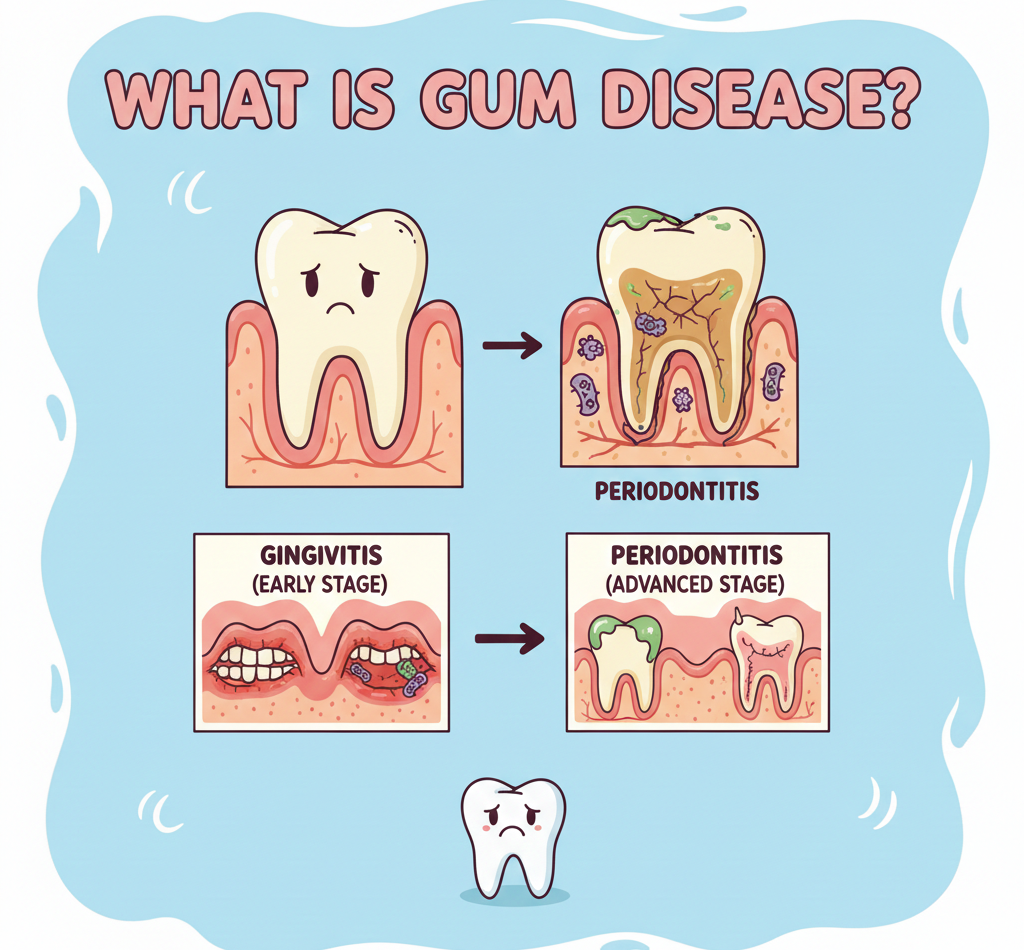
Gum disease, also called periodontal disease, is an infection of the tissues that support your teeth. It begins with plaque. Sticky, bacteria-filled plaque. When plaque isn’t removed properly, it hardens into tartar and triggers inflammation.
There are two main stages:
Gingivitis (early, reversible)
Periodontitis (advanced, irreversible)
Ignoring gum disease symptoms allows gingivitis to quietly progress into periodontitis, where real damage happens.
Gum Disease Symptoms You Should Watch For
Most people wait for pain. That’s the mistake. Gum disease is sneaky. Pain usually shows up late.
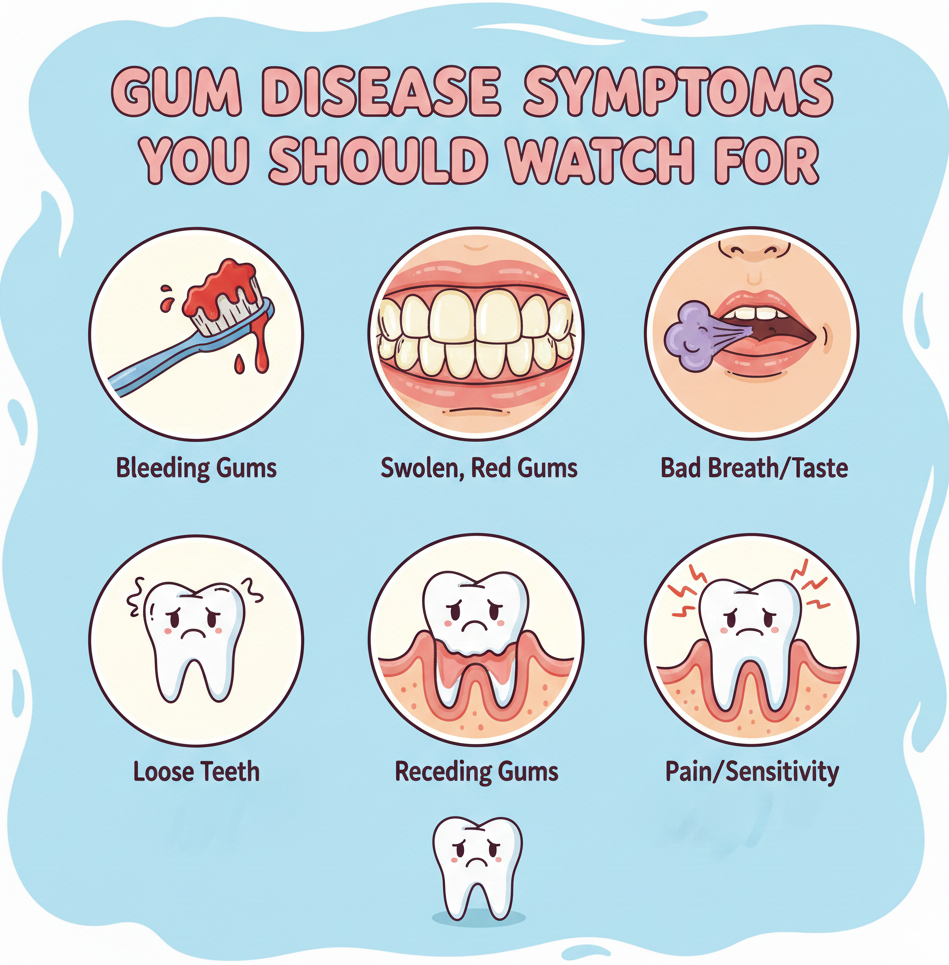
Common gum disease symptoms include:
1. Bleeding Gums
If your gums bleed while brushing or flossing, that’s not “normal” or “because you brushed too hard.” It’s inflammation. Healthy gums don’t bleed.
2. Red, Swollen, or Tender Gums
Healthy gums are pale pink and firm. Inflamed gums look red, feel puffy, and may hurt when touched.
3. Persistent Bad Breath
Chronic bad breath or a bad taste in your mouth often means bacteria are trapped under the gum line.
4. Receding Gums
Teeth may start looking longer. This happens when gums pull away due to infection and bone loss.
5. Loose or Shifting Teeth
Advanced gum disease attacks the bone. When bone support weakens, teeth loosen.
6. Pus Between Teeth and Gums
This is a serious sign of infection and should never be ignored.
Recognizing gum disease symptoms early is the difference between simple cleaning and surgical treatment.
Types of Gum Disease
Gingivitis
The mildest form. Gums are inflamed but bone is not yet affected. With proper treatment and hygiene, this stage is reversible.
Periodontitis
Inflammation spreads deeper. Gums detach from teeth, pockets form, and bone loss begins. Damage here is permanent.
Advanced Periodontitis
Severe bone loss, loose teeth, pain, abscesses, and eventual tooth loss.
Understanding these stages helps explain why untreated gum disease symptoms escalate fast.
Stages of Gum Disease (Step-by-Step)
Healthy Gums – No bleeding, no swelling
Gingivitis – Bleeding, redness, mild swelling
Early Periodontitis – Gum recession, pocket formation
Moderate Periodontitis – Bone loss, tooth mobility
Advanced Periodontitis – Tooth loss, infection, pain
Once bone loss occurs, treatment focuses on control, not cure.
What Causes Gum Disease?
Several factors increase your risk:
Poor oral hygiene
Smoking or tobacco use
Diabetes
Stress and weakened immunity
Hormonal changes
Genetics
In busy urban areas like Safdarjung Enclave, skipped dental visits and stress-driven neglect make gum disease symptoms more common than people realize.
Is Gum Disease Curable?
This depends on timing.
Gingivitis is fully curable
Periodontitis is manageable, not reversible
Bone loss cannot be undone. Treatment focuses on stopping progression and preserving remaining structures. This is why ignoring early gum disease symptoms is such a costly mistake.
Gum Disease Treatment Options
1. Professional Cleaning (Scaling & Polishing)
Removes plaque and tartar above the gum line. Effective for gingivitis.
2. Deep Cleaning (Scaling and Root Planing)
Cleans below the gum line and smooths roots to reduce bacterial buildup.
3. Medications
Antibiotics may be used to control infection.
4. Surgical Treatment
For advanced cases, procedures may be needed to reduce pockets or regenerate bone.
The gum disease treatment cost varies depending on severity. Early treatment is always cheaper.
Can You Cure Gum Disease Without a Dentist?
Short answer: No.
You can reduce symptoms with:
Proper brushing and flossing
Antibacterial mouthwash
Quitting smoking
But once tartar forms or bone loss begins, home care is not enough. Anyone Googling how to avoid treatment after noticing gum disease symptoms is already late.
Can Gum Disease Cause Cancer?
Gum disease itself does not directly cause cancer. However, chronic inflammation and bacterial infection are linked to increased risks for systemic health issues, including cardiovascular disease. Poor oral health can also worsen existing conditions.
The real danger is ignoring gum disease symptoms long enough for infections to spread.
Why Early Diagnosis Matters
Gum disease is often painless until it becomes severe. By the time teeth feel loose or painful, damage is already done.
Routine dental exams catch problems before symptoms become irreversible. This is especially important in high-density areas like Safdarjung Enclave, where delayed care is common.
How to Prevent Gum Disease
Gum disease is often painless until it becomes severe. By the time teeth feel loose or painful, damage is already done.
Routine dental exams catch problems before symptoms become irreversible. This is especially important in high-density areas like Safdarjung Enclave, where delayed care is common.
Bleeding gums, mild swelling, and bad breath are usually the first signs.
Early stages are often painless. Pain usually appears in advanced stages.
Mild cases may improve in weeks. Advanced cases require long-term management.
Yes. Untreated gum disease is the leading cause of adult tooth loss.
Extremely common, especially in people over 30.
Yes, though it is more common in adults.